Sunday, April 24, 2016

McCurdy Update

The past couple weeks have seen Lisa and I continuing our processing and item-level inventory of the McCurdy Collection.  We've definitely been making progress, as you can see from the following picture:


Our trash pile is definitely growing!  We've broken down almost 30 boxes, but that's only about a third of the way through the collection.  Here's a picture of our new, pretty boxes:


That picture is from last week, so we've made a little more progress from here.  We ran into an issue this week with some very heavy scratchboards and we came up with a solution (and another type of storage solution to add to the multiple ones we've already used): for any heavy scratchboards, we will use Banker's Boxes (like regular file boxes).  We have bundled them up and tied them with string to keep them separate.  So far, we have those boxes, the telescoping boxes (one set with lighter sketches and another with (light) scratchboards), and then sollanger boxes for the oversized materials (scratchboards and otherwise).  So there is a lot of variety in the storage of the collection, but the final intellectual arrangement will be more fluid.

Saturday, April 23, 2016

Bow Tie Cat to the Rescue


We’ve done quite a bit of work within our Shared Shelf trial this week. As our trial is coming to a close we are making sure to do lots and lots of screenshots so that we have reference material to go back to. Jennifer with Artstor has been super helpful in answering any questions that we’ve come across, including ones where we have found errors in their development. We feel confident on how to use Shared Shelf and now we are going to take a more analytical look at it to see how it will fit the inventory project. We are also still in communication with Benoit and hope to test out his site soon.

This cute little cat helped us figure out Shared Shelf and what we were doing wrong.

Tuesday, April 12, 2016

From Narnia to Hogwarts

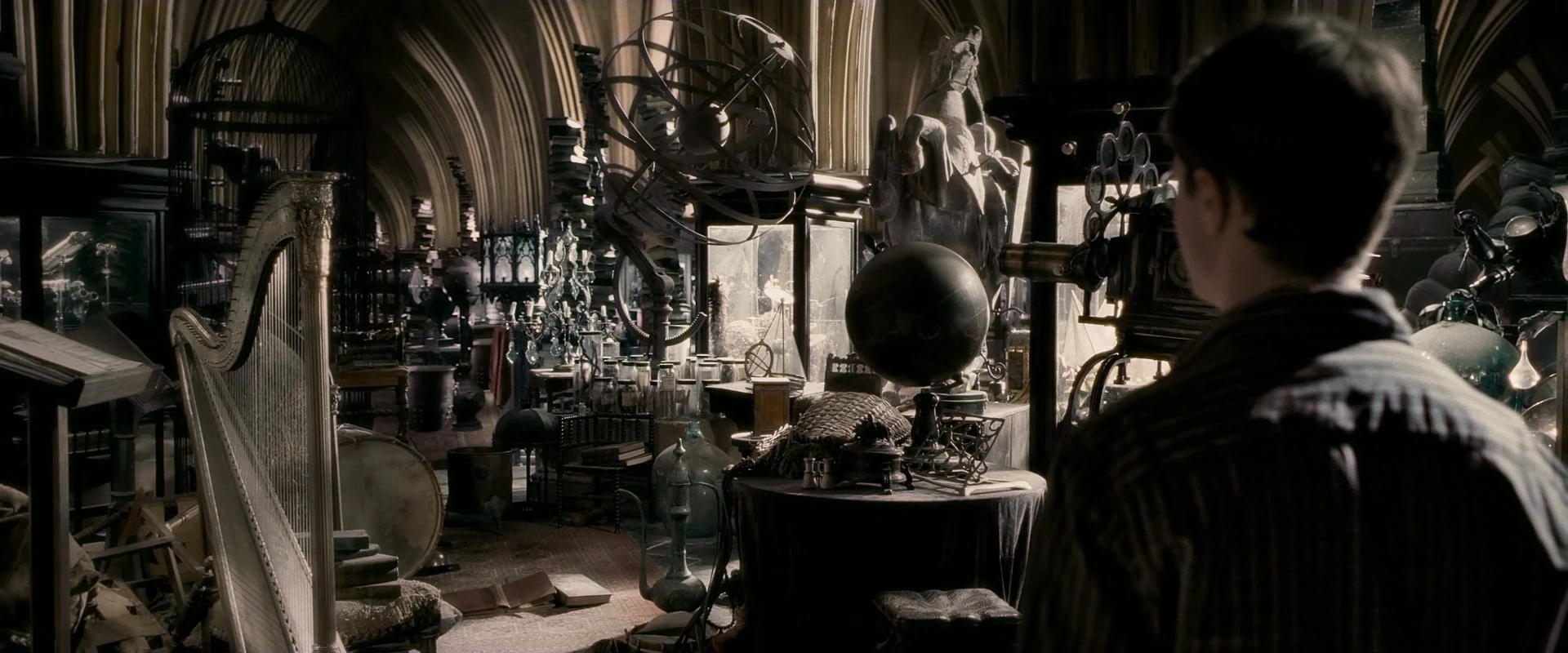
The majority of the Nancy Webb collection has finally made its way out of Narnia!!! (Narnia is an imaginary magical land - i.e. the CAB room which seemed to be an imaginary land to those of us on the print inventory project at the BPL)


After last weeks clean out of the CAB room we were able to get the 2 trashcans with lids containing prints into the print stacks and some of the larger framed prints into the Jordan room (or as I prefer to call it...the Room of Requirement)


The items that went into the Jordan room are going to have to be checked for condition issues; some of the framed prints are thought to have some growth developments underneath the glass...

 As more working space becomes available in Jordan, more things will be taken out of the CAB room to be examined. The only Nancy Webb items that will remain in the CAB room are the two boxes with a sculpture each in them-since they are not prints or drawings we will not be processing/inventorying these. 

An interesting fact that we did discover came from the lid of the trash cans. The shipping label placed on them by the fine arts transport/shipping company dated that they were shipped to the BPL May 2014; however, the actual "Nancy McIvor Webb Trust Bequest of Drawings and Prints" was not accepted by the library until May 17 2015, which is known by the public minutes of the Meeting of the Trustees Special Collections Committee. Interesting that the collection was in BPL's care for a year prior to actually accepting the bequest. 

We're continuing to inventory the items that have come out of the CAB room and into the print stacks and are going back and inventorying those items that we had previously processed. This week we will look into the items that were brought into the Jordan room and begin discussing what can be done with the prints in the trash cans, as they are rolled, have suffered water damage and are now quite stiff and will be difficult to unroll. 


Thursday, April 7, 2016

Copyright Research Update

I wanted to wait another day to report as I had a very exciting phone call with Nick Shockey, the Director of Programs and Engagement at SPARC (the Scholarly Publishing and Academic Resources Coalition), a lobbying and advocacy group dedicated to open access, open data and open education. My path to Nick was very circuitous. Much of my academic focus since coming to Simmons has focused on copyright and intellectual property, and part of this final research push has included my enrollment in Harvard Law School's CopyrightX course, and development of a chapter for a Kyle Courtney edited book on library leadership and intellectual property, to be published later this year on an open access press, Mission Bell Media. I see all the research as part of one grand exploration, really, and have realized that the focus of my Capstone project is less on just public media, and more on the impact of copyright and the open movement on research services and access to information--and even moreso, the need for involvement of LIS students in these advocacy realms.

I have had trouble scheduling an interview with Peter Kaufman at Columbia, which has also led to my slight readjustment of focus. I did conduct a great interview with Karen Cariani at the WGBH Library and Media Archive where we discuss the many hinderances copyright has placed upon access to public media archives, which plays into a larger discussion of the potential digital media provides in terms of increasing access, but the barriers placed upon this potential by policy and law.

In working on my chapter for Kyle--which I am now seeing as the major deliverable for this project, since it IS a publishable deliverable as I had hoped, but offers more forward examination than limited to just public media. I feel passionately that LIS programs (not just Simmons) are not adequately preparing future librarians for work with digital media in that attention to intellectual property parameters are mostly glossed over, or even worse, the idea that copyright is "scary" and thus shouldn't be approached by librarians is further promoted. This is dangerous. In the course of this research I have spoken with professional librarians and archivists in many areas/capacities, and all agree a solid understanding of copyright is absolutely integral to ANY library work you do, especially if you intend to move into leadership positions. I participated in an open community call of early career librarians in the scholarly communications field hosted by Open Con a few days ago and it was repeated by most, that their LIS programs did not prepare them for working with intellectual property or open access. This needs to change!

My final thesis goes beyond that and argues not only do we need more (required) curriculum but we need to engage LIS students in copyright and open access advocacy (which is a complicated relationship in and of itself, my piece explains a bit), because if we aren't prepared to advocate for our users in some of the most pressing issues facing access to information in the coming era, we are doing them, and our professional a disservice.

I will be completing a first draft of the chapter this week, and then expanding interviews. I have been invited by Open Con to present my research on their next community call May 10th, which seems a perfect 'cap' to my capstone!

Wednesday, April 6, 2016

Meetings and Meetings

Our meeting with Martha today went very well as did our meeting with Benoit yesterday. By the time we met with Benoit he had already made all of the changes that we suggested. There are just a couple more questions that we have for him before we can go and test his web form. Martha is going to share with us 500-600 records for us to use to test both Shared Shelf and Benoit’s form. At both meetings we talked about meeting with Tom from the BPL Digitization department so that we can test adding image files to the records. The Nason and Prang collections are fully digitized, so we are hoping to start with those. We are going to begin to create a workflow analysis of the inventory process. At this moment in time we are thinking about using Benoit’s web form for now and throughout the summer until Shared Shelf is officially approved.

Here is a little motivation for you all:


Tuesday, April 5, 2016

From smuggling to comparative religion

And all I had to do was hop over a couple of portraits to a different part of the same wall:

Hannah Adams, painted by Chester Harding, collection of the Boston Athenaeum

Although, much more awesomely, Hannah Adams has also been featured in a Wonder Woman issue:


courtesy of http://comicvine.gamespot.com/hannah-adams/4005-80183/
My Perkins biography was well-received, and I made a short version of it to be recorded for the iPhone app that the Athenaeum Director of Education has been developing for self-guided tours.

I've now moved on to documenting the life, fascinating controversies, and work of Hannah Adams (1755-1831). She is (relatively) famous as the first woman to make her living as a writer in America. (Not the first one to publish, but the first for whom it wasn't just a hobby.) She also was a major pioneer in the field of comparative religion, which until her time had been less of a scholarly exercise and more of an excuse for clerics to write incredibly insulting things about other religions and why Christianity was better. She is also tied to the founding of the Unitarian Church, and was supported by some of the most significant wealthy Federalists in Boston. She didn't make it to be that important without suffering -- from living in poverty, to waging unsuccessful copyright battles, to coming head-to-head with some of the scariest ministers in New England, she had to have some serious spunk to get as far as she did. Not bad for a woman of her time, especially one who who was constantly ill, had no formal education, and tended to accidentally stay at the Athenaeum until after it was closed in the evenings because reading was virtually her entire life. In other words, an excellent proto-nerd.

Monday, April 4, 2016

More Tosti

Hi everyone,
I just wanted to post another update! As we approach the end of the semester (already??) I have been thinking about the goals of my project and how I want to wrap it up in the final report. In terms of going through volumes and doing basic condition reports for individual prints, I am going to finish as much as I can. I have also been working on spreadsheets for each volume with the metadata from the original catalog, plus any corrections in metadata I made using the print themselves. For instance, a lot of the prints in the catalog have a generic title that does not help to identify the actual print (such as Frescoes in the hall of X), so I have been creating identifying titles using words that appear on the print. It could be an interesting future project for someone to do more research on individual prints and the works that are reproduced in the prints.

In my final report, I am hoping to explain my workflow and processes for going through the prints, and I am also hoping to draw some larger conclusions about the collection and its place in the Print Department and the library. I would like to discuss how the prints were used in the past, and how they could be used in the future. Hopefully, a report of this kind could make a case for conservation of the collection.