Monday, February 29, 2016

McCurdy update

Last week, Caitlin and I used the bill of lading and the overview of the McCurdy collection to begin populating the templates used by the Print Inventory to prepare to inventory the original shipping boxes in the Jordan Room. From our initial investigation and conversations with Print Collection staff, we were prepared that the actual contents would not match the typed container list, taped to each opened box.

Caitlin and I decided to test two boxes at item level to see how the actual contents of the opened boxes would compare against the data we reformatted and the packing lists. We were not surprised to find items missing from the boxes (primarily the woodblocks, books and correspondence).  It was also interesting to see the range of materials included in the collection that we had read about. In the boxes were preliminary thumbnail sketches, scratchboard drawings, sketches on tissue paper, publishers’ proofs, book jackets, promotional materials and, even silk neckties! Actually seeing the objects raised all sorts of questions for us regarding documentation processes, conservation needs, and storage materials.
Scratchboard by Michael McCurdy, from "Paul Revere"(we're betting that
plastic covering and adhesive tape are not exactly archival)

After this initial test, Caitlin and I began a container level inventory of all three storage places within the Jordan room: a double table, large library cart and tall baker’s rack, all full of boxes.  We also discovered materials from a related collection (“Face to Face”) that Caitlin had worked on in a past internship, mixed in with our collection. Our next step? Locate the woodblocks, books and archival material pulled from the boxes…treasure hunt ahead!
One container yield two ties designed by Michael McCurdy for the Sierra Club. The
sketches and mockups for the ties are included in the collection.

Update on Perkins

As you all know, my medical issues were preventing progress for a lot of the past month, but I have finally been working on things again and I've done some more reading about Thomas Handasyd Perkins. I even got some time in the rare book reading room to check out some of the letters he and his brother wrote to their business partners.

They were as slimy and horrible as I had suspected they might be. Maybe worse.

I've started writing a new history of Mr. Perkins that docents will read as they decide how to structure their talks. Hannah and I have agreed that the most important quote for me to include would be one I found from a later biographer who said that "smuggling is as New England as boiled dinner."

And tomorrow you get to meet my supervisor, Hannah, in class!

Saturday, February 27, 2016

Update on the Tosti collection

Hi everyone,
I have been continuing the process of opening up volumes, going through to see if anything is missing/tipped in, and doing condition reports on the prints. This process is pretty smooth, but I am noticing things that I want to look into a little more. For instance, the volumes (which are all pretty big, but of varying sizes) are all bound a bit differently. Some volumes were clearly bound by the BPL: they have cloth bindings, the spines are stamped with BPL stamps, and the bindings are also stamped with numbers that we're pretty sure are the BPL identifying numbers (the A.2.1 kind of numbers that I mentioned last week). But this week I started working on some volumes that are covered in marbled paper, have gilt decorations on the spine, and have different identifying numbers that were possibly the original numbers used by Tosti. The different kinds of bindings have made me interested in how the prints were originally collected and organized: did Tosti buy volumes of prints already bound together? Did he select certain prints from his collection to be bound together? I think it would be cool to learn more about how the collection was originally organized and bound...if that information is out there somewhere!

Another update is the annotated catalog that Martha and the inventory workers found in the stacks. I have been working with a digitized version of the nineteenth century catalog of the Tosti collection, and a while ago, at some point, someone took the catalog, pasted it into a book, and annotated the catalog. This annotated catalog is going to be digitized and I am very excited to spend time looking at it: the annotations include information about portrait sitters, dates for the prints, and other notes that will be very helpful.

It seems like every time I open a new volume, I am learning something new about the collection!

Wednesday, February 24, 2016

More McCurdy!

Lisa and I are currently working our way through the beginning stages of making an inventory.  We have discussed that, while our main deliverable will be a processing plan, it is difficult to plan steps and a workflow without being certain that everything is accounted for.

We are both working from the documentation we have -- a large Collection Overview that lists (hopefully) everything in the boxes, the bill of lading, and permissions forms -- to create an excel spreadsheet that we can then use to tick stuff off as we open the boxes.  The Collection Overview is pretty exhaustive, but not very clear.  For example, there are box notations for some items, but not all, so it is unclear if everything in that section is in the same box or not.  The excel spreadsheet we're plugging into is the same one used for the Print Department inventory.  It has some fields that aren't necessary for us, but the fields we're filling in are: object type, source of data, creator/artist, other name, box title, title, notes, date of publication or creation, and publisher.


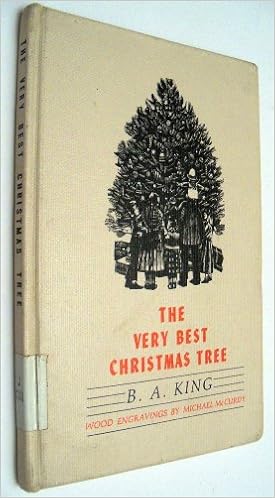
The boxes so far seem to represent all of McCurdy's work under one title.  Most of these are for certain books, so, for example, the box titled "The Very Best Christmas Tree" includes a copy of the book, and various prints, proofs, mock-ups, and even correspondence about the publication of the book.  Most of the information we need is found in the Collection Overview, although we also want to supply the name authorities for each author and we may need to research some of the missing publication information (or it may be evident once we crack open the boxes).

Lisa brought up a great point about the research value of this collection -- someone interested in book illustration could see the process from planning to production.

We plan on finishing our halves of the spreadsheets by the time we meet again on Friday.  Then we can start cross-checking our spreadsheet with what we find in the boxes!

Monday, February 22, 2016

Our Project So Far

Hello everyone! Kelsey and I have been working on our project for a couple of weeks now. So far Kelsey has given me a tour of the print department and showed me all the cool things in the stacks including Donald Trump’s hair ; ) We have gone through the inventory excel sheets and determined what information is being captured and what needs to be changed to the webpage that Benoit created for us. We made suggestions and notes on changes we thought could be done. After receiving additional suggestions by Martha on updates and clarification on things we have gone over the webpage a few more times. Below is what we hope to accomplish next.

Next up we are going to go through CCO and RBMS for controlled vocabulary in our drop-down menus. We would like to meet with Martha again to ask a few more questions and possibly set up a time to meet with Benoit as well. As we continue to work on this webpage we are going to highlight what sections are needed for each stage of this project. For example, Martha informed us that the “Materials and Techniques” section is needed for the cataloging portion of this project. After we are done looking at the webpage, we will further our search into ARTstor and Shared Shelf. We are hoping to start our 30 day trial with Shared Shelf soon so that we can test it out ourselves. Throughout all of this we are also going to look for articles about both ARTstor and Shared Shelf to see if we can learn even more about other experiences with them.

Sunday, February 21, 2016

Rights/Licensing Research Progress

Not a ton more to report since our meeting last week, but I have followed up on the points discussed, namely setting up a meeting with Alison Smith, the Associate Director of Stock Sales and Licensing at WGBH, working in the Library and Media Archives. Alison and I will sit down on March 3rd, and prior to then my main goal will be to familiarize myself with the department's externally expressed policies via their website. In addition, I will make sure to have a solid list of questions drafted and anticipated requests for numbers/information that they are able to share with me (revenue, requests, etc.). 

Casey Davis sent me a copy of the AAPB's Deed of Gift, which I have begun to review. She also put me in touch with Peter Kaufman, Associate Dir. of Columbia's Center for New Media Teaching and Learning, co-chair of JISC's Film & Sound Think Tank, and is on the board of EUScreen. He is also the founder of Intelligent TV. Casey warned me Peter was out of town for a week, but I sent an introductory email and downloaded several of his publications to read up on in advance of speaking with him, including "Assessing the Audiovisual Archive Market: Models & Approaches for Audiovisual Content Exploitation," and "Video on Wikipedia and the Open Web: A Guide for Cultural and Educational Institutions."  

So right now I am heavily in reading/research mode and have begun my literature search for pieces addressing licensing, copyright, and open access in public media. 

Tuesday, February 16, 2016

Advancements With McCurdy

Hello, all!

This week, Lisa and I concentrated on getting organized in preparation for really getting into the processing of the McCurdy collection.  Using the processing plan template we found on the LOC website, I have been attempting to fill in as much as possible from our available documentation: the name of the collection, basic scope and content/research value notes, and preliminary steps in getting a handle on this disorder of a collection. Lisa and Martha finally found some acquisition documentation complete with a bill of lading. This includes a numbered box list, and Lisa is cross-checking both of our pieces of documentation to make sure we have it all and to resolve discrepancies. The next step is to capture the information from the print-outs taped to each box -- probably by photographing them. We will then need to make sure everything is accounted for, and also find a way to share the data between the two of us.

We are excited to discuss everything in class today and to hear about everyone's projects!

- Caitlin & Lisa

Monday, February 15, 2016

The Wonder of 35mm Slides

Before I start, I just want to tell you, Martha, that you have a great reputation at Harvard. I have gotten told by a great number of people how great you are and how instrumental you were in setting up the system of cataloging visual materials that I am working with.

I finally got a chance to dive in head first into the 35mm slides this past week. I am working right now with 35mm slides of Iran. I have to assess the state of their cataloging, figure out who the slide was donated by, and then recommending or declining them for digitization based on this status. Many of these slides have been cataloged in VIA but have not been digitized, so I am helping close this gap.

I love working with 35mm slides. This may be an unpopular opinion, but I just love their size and the tactility of them. I haven't since I was in undergrad and scanned them for the art history department, but I am really enjoying working with them. I am getting a light pad to use in the next week or so to make it easier to see the slides. 

I get to work with VIA and SharedShelf during my work, which I am enjoying. I have never gotten to see the back end of SharedShelf before, so I am really enjoying seeing how it works, knowing what kind of fields are required and offered by the system, and learning how to navigate it. I am also enjoying working with VIA, since I have never done so before. 

I cannot wait to dive deeper into this project and see what else I get to do to help with their visual resources. 

Saturday, February 13, 2016

Tosti collection

Hi everyone!
I have been to the Boston Public Library print stacks to work with the Tosti collection about three times so far. I have a pretty clear workflow: I take a wrapped volume from the shelf, open it, and flip through the volume, comparing the prints that appear in the volume with the nineteenth-century catalog. Basically, I am checking to see if the prints that should be in the volume are there, and if anything unexpected appears. Then I go back through the bound volume and create a condition report for each print, checking the prints to see if there is any damage and making recommendations, such as minor cleaning.  The bound volumes are labeled alphanumerically, so there is a clear order that I use to go through the volumes (I started with volume A.2.1, moved to A.3.1, etc.).

I have no idea what a volume will look like before I open its brown paper wrapping. Some of them are so big I can't lift them by myself--I just reached the first one that I could carry through the print stacks by myself. The last volume I worked on had several pages tipped-in to the book. I had an exciting moment on Thursday when I realized that a series of prints in the Tosti collection is the same as a series held by the British Museum--talk about copy cataloging! It's an exciting project in that I never know what's going to happen, but that also creates challenges. For instance, I opened a volume on Thursday which had mold in it. Luckily, it doesn't hold the threat of propagating!

Right now, the goal is to just continue with the workflow I've been doing. I wanted to shout out a thanks to Brett and Aaron in the print stacks, who have answered a lot of my questions and been really helpful!

Thursday, February 11, 2016

My discoveries of the week

Thanks to those of you who have posted so far - and if you haven't written anything up yet, now is a good time!

As a reminder our postponed class meeting is this Tuesday the 16th at 10am.

I was moaning on about my various commitments in my last post and just to encourage you I want to say that I couldn't handle it all so I postponed the taxes appointment (cowardice in part, not ready mainly), the Cemetery meeting isn't until next week, and I did the NEDCC meeting by conference call. The week seemed much saner once I took out big chunks of travel time.

I have thirteen lovely ladies in my Lifelong Learning class and they are going to be fun. Doesn't mean I don't have work to do for them but some of the anxiety is gone. I started out by asking how many of them followed social media in any form - about 2 admitted to following grandchildren on FaceBook but that was it. They looked alarmed when I even mentioned it lest I be about to require them to open a Twitter account.

The joys and frustrations of the Print Department were mainly focused for me this week on dealing with the need to prepare for two additional presentations. I found some interesting stuff when I was investigating the two Whistler prints that we were showing. One, the Girl Reading by Lamplight, is an etching of Whistler's half-sister Deborah, who was married to fellow artist and etcher Francis Seymour Haden. Haden, the older man, had been enjoying some success with his landscape etchings and for a time he and Whistler worked together. The Girl Reading by Lamplight was apparently drawn and etched from life. Haden etched the same scene, in landscape format, and when I found out about that I went to our inventory database to see if we also had Haden's print. Indeed, there it was. So for my last presentation I was able to tell the story of the two men, whose relationship soon faltered - Whistler was very difficult always - and show both prints together. Which one do you like better?

Whistler's A Girl Reading by Lamplight, 1859

Haden's A Lady Reading by Lamplight, 1859

Rights research at WGBH

Today I met with Casey Davis, Project Manager of the American Archive of Public Broadcasting at the WGBH Educational Foundation to review my research goals, get her feedback, and learn a bit more about workflows and processes related to rights clearance at WGBH. 

The meeting was extremely productive and Casey feels my thesis is starting to focus in on a really compelling topic: how the climate of open access is impacting the rights and licensing landscape in public media amidst the push for digitization--especially as compared to current trends in other time-based media archives and the digital reproductions market prevalent in the museum world--and how copyright reform and advocacy may further influence the course of public media's approaches and policies in the future. 

Casey outlined three current streams of thought about open access initiatives in the public media sector, which I outline below:

  1. The all open access movement that is pushing for all content made accessible via Creative Commons licenses. Individuals to contact:
    1. At Columbia Peter Koffman, a big open licensing in public media advocate (Casey is connecting me)
    2. Newshour, WNET's Winter Shank
    3. Jo Skinner
    4. Melody Joy Kramer
  2. The middle ground: WGBH -- working to digitize, make accessible, but also in a position to monetize
    1. I am going to review the WGBH stock sales website to familiarize myself with their policies/procedures
    2. Casey is going to connect me with the stock sales department lead, Allison Smith
    3. See below for data to be requested
  3. Faction in public media encouraging digitization as the key to more revenue. 
    1. Led by the former stock footage licensing AAPB director, now at CBP p
    2. Pushing for stations to monetize archival content--potentially stymieing vision of open access
    3. Released recent report to reference
    4. Concern that this will hinder access
    5. Metadata vs transcripts vs content -- some encouraging stations to even license their metadata!

DATA TO COLLECT:

Reference & Reproduction requests
Revenues - gross and actual, pre/during-digitization
Actual costs of digitization
Numbers from member stations
Determination of non-contracted/orphan works

Background to AAPB:

The AAPB and Library of Congress received a grant for digitization. At that time many member stations had already signed basic agreements with the CPB. The AAPB held a rights-related meeting early on with folks from the Berkman Center, WGBH legal counsel, and the LoC and determined they needed to go back to stations for firmer contracts if they were to put digitized content online.

Many stations actually don’t have contracts with content producers, and didn’t know what they had in their collections, so the AAPB requested they sign a quitclaim, which allowed the AAPB to make things available to the extent the stations do in fact own the content.

The team then developed a strategy to review content in order to determine what was legally appropriate for the online reading room. With new collections the Archive uses a deed of gift modeled after Peter Hirtle's example in Research Library Issues, which includes the request for donors to dedicate content to a CC license, however, the stations can choose to sign the agreement and not comply with that request. They must, however, agree to open all metadata up to the public domain. 

This meeting was very fruitful. Casey is going to put me in touch with several individuals, and member stations, and recommended a few resources/reports to review. In addition she will share the AAPB's Deed of Gift with me. My next step will be to set up an appointment with Allison Smith at WGBH after reviewing their stock sales information, and to update myself with a literature review refresher to see if anything new has been published on this topic in the past 6 months or so.

Monday, February 8, 2016

Education Internship at the Boston Athenaeum

Because I've been in the hospital and have had a ton of doctors' appointments the past couple of weeks, quite a bit of my work has been remote and research-based so far for this internship. Fortunately, my supervisor, Director of Education Hannah Weisman, has been very understanding. There are a lot of small projects within this project, but the overall aim is for me to write some more diverse historical perspectives into our education materials. (Full disclosure: I've already worked at the Athenaeum for two years in a different department, so I say "our" for simplicity's sake and I hope that's not too weird.) As an example, here's the subject of my first project-within-the-project:

From the Boston Athenaeum website. Artist: Thomas Sully. Date: 1831-1832.

Thomas Handasyd Perkins. He's treated like a superhero in Massachusetts. He founded or gave lots of money to a pretty big list of institutions, such as Massachusetts General Hospital, the Perkins Institute for the Blind, and of course the Boston Athenaeum, just to name a couple of super relevant highlights. However, guess how he made his money? Slaves and opium. Not only that, but he was highly involved in some of the nastiest parts of each of those businesses, from what I've been discovering. That's all I'll say for now, because I'm still fact-checking. So, my job is to highlight some of those points, as well as the more well-known ones about his good deeds, for docent talks that are given when non-members come in for tours. I'm supposed to do this with quite a few historical figures represented in our collections, not necessarily to air dirty laundry, but also to highlight contributions of women, people of color, and otherwise diverse groups that have not often been celebrated in old New England institutions like ours. The idea is to present a fuller picture of our history, and not just to pretend it was all rosy... or that it wasn't the labor of enslaved people and opium addicts that made Boston's prosperity possible. (Cue Ta-Nehisi Coates quotes here.) Stay tuned for how well I fare and how many angry people throw things at me.

Sunday, February 7, 2016

McCurdy Collection - Caitlin and Lisa

Hello!
For our capstone, Caitlin and I are conducting an assessment and creating a processing plan for the Michael McCurdy Collection at the Boston Public Library. Over the last two weeks, we've worked to wrap our heads around exactly what the collection entails, gather resources and track down the various bits and pieces that will be needed to put together our processing plan. Here's our assignment, as written up by the marvelous Martha:

Module 5: Assessment and processing plan for Michael McCurdy collection: McCurdy is an important artist and illustrator. According to Wikipedia (!) his main archive of work covering a period of 48 years is at the Boston Public Library. The contents of the collection are in wrappers and need to be opened, checked against the existing inventory and prepared for rehousing. In addition to assessing the condition of the contents of the collection, this module will include the preparation of a workable processing plan.

Caitlin and I have done some initial scoping out of the project and took some pictures as documentation. For your enjoyment and edification, we're including them in the post!

The Jordan Room at the BPL (one baker's rack of McCurdy on the right of the image)

Baker's Rack full of boxes from the McCurdy Collection. Note the titles and packing slips on the boxes.
Bigger than your average library cart, loaded with more McCurdy. Oh, note the box on the top tipped sideways...it is marked "this side up" facing us. I'm thinking the contents, if not packed securely, have all slipped to the bottom.
Close up of a table filled with boxes, most of which have been opened. Note the box on the lower right with the packing slip cut through.
Peeked into one of the open boxes on the baker's rack; here's a book jacket featuring his illustrations.
Another peek in the box labeled, "An Old Fashioned Thanksgiving"

The boxes in the Jordan room are all labeled and numbered (the highest number we could find without disturbing the boxes was #85); each box has an itemized packing list affixed to the top. Looking in one of the opened boxes, it's pretty clear to see that some of the items listed on the packing slip have already been removed. Talking with Print Collection staffer Aaron, it would seem that some of the collection is stored in at least two other rooms; original woodblocks used to create the artwork in one location and correspondence/archival material stored in Print Stacks (confirmed this already). Martha gave us a 35 page document to go along with the project that is a descriptive write up of the collection. What we need to track down is the original inventory that would have been included as part of the purchase of the collection. To gain access to that documentation, we'll need to appeal to the Head of Collections.

Here are some of the resources we've gathered:

Friday, February 5, 2016

Research Project Reflection Week #1

This will be brief as I have not gotten going that far on my copyright research project at WGBH yet since this week my digital exhibit developed as part of my internship at the American Archive of Public Broadcasting officially launched! The project gave me a taste of the rights clearance process, quitclaims, and other administrative/legal steps required in the digitization process, as the American Archive of Public Broadcasting acquired a large donation (first of its kinda from a single donor) from New Hampshire Public Radio that we incorporated into my exhibit. 

I plan to meet with Casey tonight and follow up next week about getting back in to the AAPB to meet with her, and to start observing how their actual rights clearance, copyright assessment, and strategizing works in terms of workflow and general milieu. My first concern is to determine what sort of data I should request from them. I am thinking of statistics on licensing requests, variances in rights agreements when collections are transferred to the archive, policies surrounding digitization/copyright analysis, but would love any feedback or suggestions! 

I did have my first CopyrightX course last week. It is going to be extremely helpful in really solidifying my foundational understanding of copyright law and theory--and of intellectual property policy in general. The online discussion section was exciting, with professionals from all sorts of backgrounds and levels of experience coming together to breakdown case studies around copyright that we might actually encounter. I felt both prepared and charged by how much I have to learn! The readings are heavy, but support so much of my other work and research that it doesn't feel overwhelming. Yet. :-)
Welcome capstoners! Here's the blog for our various updates - I will be keeping you posted on here too.

Scenes from my life!

I might have mentioned that I have rather overcommitted myself and this month is turning into the perfect storm. Thank god for the snow today! I have to do two more presentations to the BPL Associates about the Print Department project (the first one was a huge success so the bar is a little high!). Next week I also have the first of four lectures to the Sherborn Council on Aging's Lifelong Learning group (what was I thinking???), plus a mid-point report due on the Worcester Art Museum project. Plus at various times the Annual Meeting of the Sherborn Historical Society at which I have to give the annual report (I'm the secretary of course), a meeting of the Dell Park Cemetery Board of Trustees (I may have to skip that one), Board of Directors meeting of Northeast Document Conservation Center, get my taxes done (can't skip that), and Valentines Day (oh well). Don't follow my example whatever you do.

Am seriously looking for ways to relax that I can do between anxiety attacks - lots of places are making coloring books for adults available - check them out here if you have a second to spare:
link to Open Culture
color me exhausted!